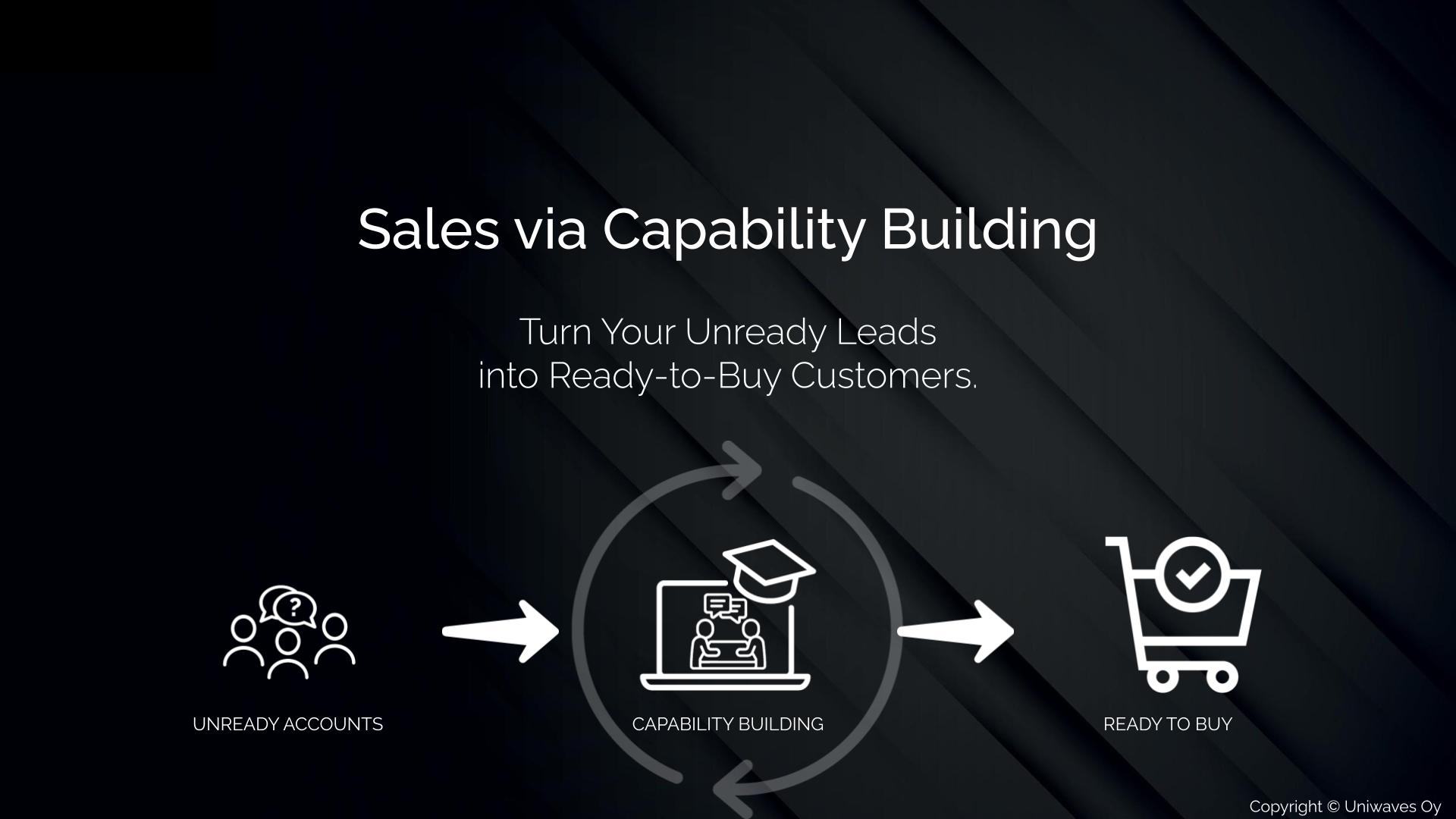
Very often, innovative companies try to sell products to customers who are not yet ready to buy them.
Not because the product is bad. But because the customer does not yet understand the new way of working around it.
They may have done the same process thousands of times, and this new way feels very different from what they are used to.
Research suggests that up to 95% of B2B buyers are not actively looking to buy at a given time. At the same time, many stalled deals are not really about price or features. Buyers simply do not feel confident enough to move forward.
Gartner research also shows that many B2B buying groups spend only a small part of their total buying journey actually talking with vendors.
In our experience, there are usually three main reasons behind this:
Customers do not yet understand the new way of working
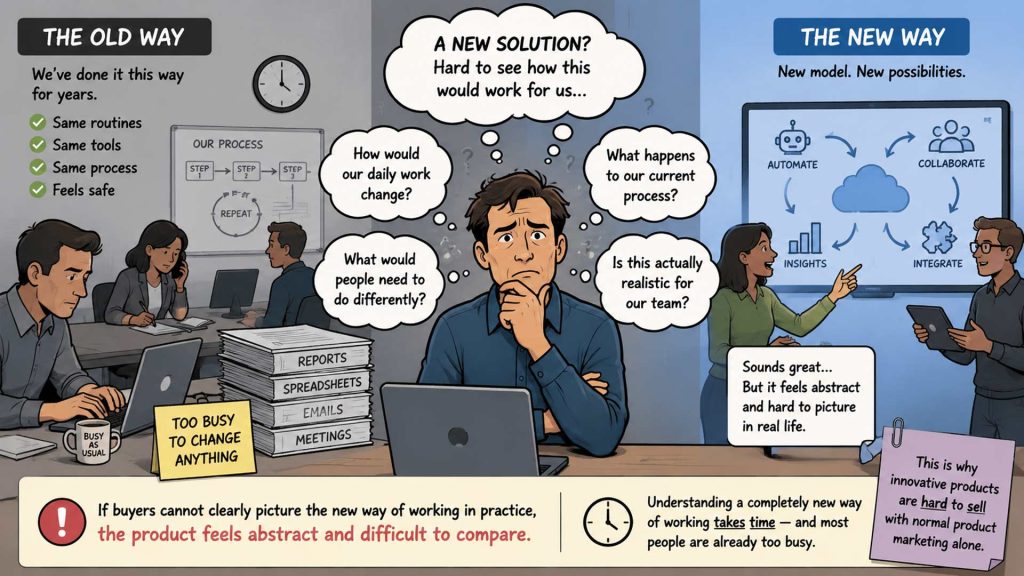
This is often the biggest hidden reason why innovative products sell slowly. Many buyers have done the same work in the same way for years. Their daily routines, processes, meetings, tools, and ways of thinking are built around the old model. They may not like it completely, but it is the way they know and are used to.
Innovation adoption research has shown for years that people adopt new ideas more slowly when they feel difficult to understand, difficult to compare, or too different from existing ways of working.
When a completely new solution is introduced, customers are not only comparing products. They are trying to understand:
- How would our daily work change?
- What would our people need to do differently?
- How it changes our current process?
- Is this actually realistic for our team?
If they cannot clearly picture the new way of working in practice, the product starts to feel abstract and difficult to compare. At the same time, understanding a completely new way of working takes time and unfortunately most people already feel too busy to stop and learn it properly.
This is why many innovative and very good products are hard to sell with normal product marketing alone.
Too many choices and too much information
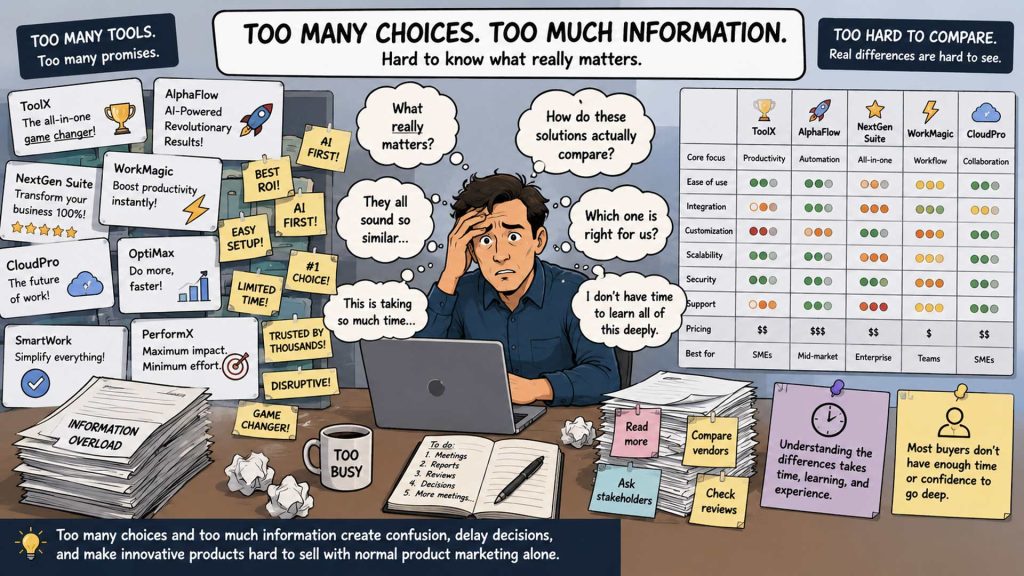
There are too many tools, too many promises, and too much information everywhere. When the whole area is new, buyers often find it hard to understand what really matters and how the different solutions are different from each other. In many cases, it feels easier to continue with the old way than try to decide which new solution is actually good.
Behavioral research has shown that too many choices often make decision-making harder instead of easier. This is sometimes called “choice overload” or “decision paralysis.”
In B2B buying, this problem becomes even bigger because buyers often need to compare complex solutions they do not fully understand yet.
Many products sound almost the same at first, even when the real differences are big. Understanding those differences takes time, learning, and real experience. Most buyers simply do not have enough time or confidence to study a completely new area deeply.
Fear of failure
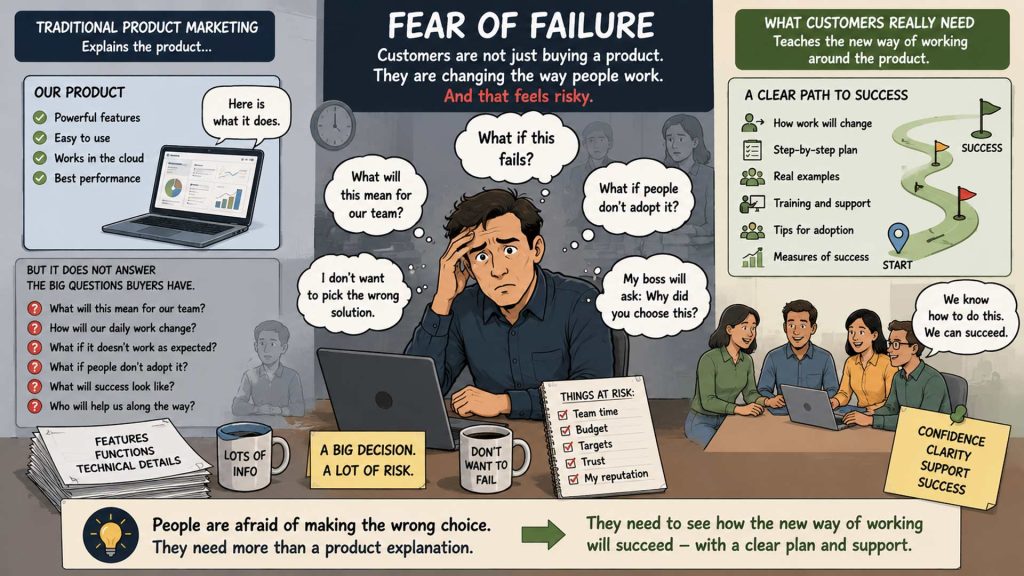
Customers are not only buying software or services. They are changing the way people work, and that always feels risky.
Research around organizational change shows that people naturally resist changes that create uncertainty around daily work, team roles, or performance expectations.
Buyers are often not afraid of the technology itself. They are afraid of what happens if the change does not work in practice.
This is where traditional product marketing often struggles. It explains the product. But it does not teach the new way of working around the product.
Sales via Capability Building
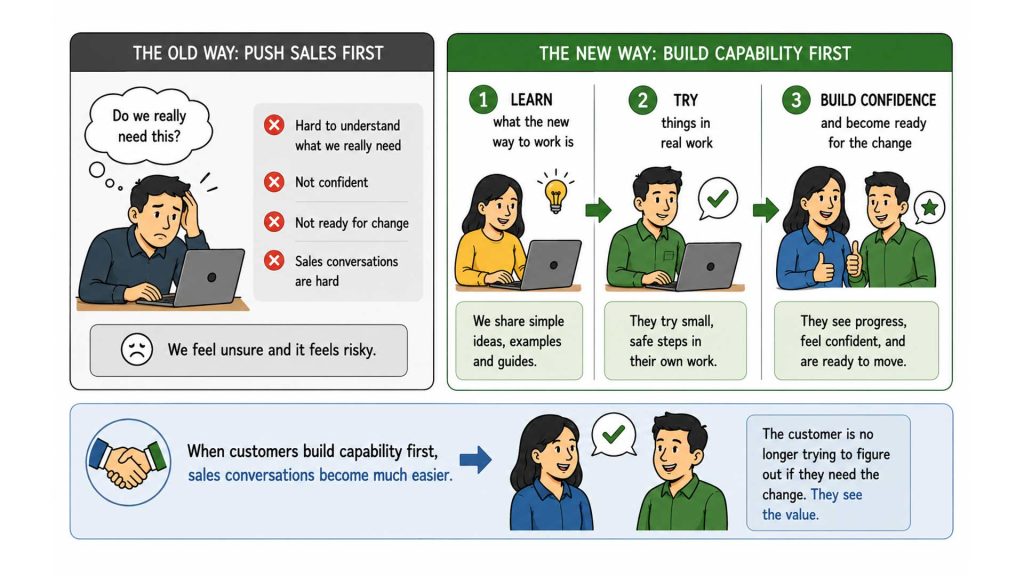
That is why we have been exploring the idea of “Sales via Capability Building”.
Instead of pushing sales first, we should help our future customers:
- learn what the new way to work is
- try things in real work
- build confidence
- become ready for the change
- buy naturally when they see the value themselves
When customers build capability first, sales conversations become much easier. Because the customer is no longer trying to figure out if they need the change.
Innovation research has also shown that people adopt new ideas more easily when they can safely try them in practice before making a major commitment.
Learn more
- Organizational Change: The Challenge of Change Aversion, Jason A. Hubbart
- Sales via Capability Building at uniwaves.com – We turn your unready leads into ready-to-buy customers
- Examining the Impact of Resistance to Innovation on New Product Adoption Behavior: The Role of Purchase Intention, Loren Absalão Vaz Malate
- The Paradox of Choice, Heather McKee
Leave a Reply